What Is Fever in Children? When to Worry
Is 100.4°F a fever?
Yes. A temperature of 100.4°F (38°C) or higher is generally considered a fever. The next step depends on your child’s age, symptoms, and overall condition.
Is fever itself dangerous?
Fever is often the body’s response to infection and is not automatically dangerous. Watch your child’s behavior, breathing, hydration, and alertness. Call for guidance when you are concerned, and seek emergency care for serious warning signs.
What should I give my child for a fever?
Comfort medication may be appropriate, but dosing must be based on your child’s current weight and the specific medicine. Ask Beacon Pediatrics if you are unsure. Do not guess, combine products carelessly, or use an adult dose.
When should I call about a baby’s fever?
Call Beacon Pediatrics for any temperature of 100.4°F or higher in a baby younger than 3 months . Prompt medical advice is important for this age group.
Should I go to the ER for every fever?
No. Many fevers can be managed with comfort care and pediatric guidance. Go to the ER for trouble breathing, severe dehydration, seizure, difficulty waking, serious unresponsiveness, or another immediate emergency.
Fever in children means a temperature of 100.4°F (38°C) or higher. It is often part of the body’s natural response to infection, but age and symptoms matter. Call a pediatrician for any fever in a baby younger than 3 months, and seek emergency care for serious warning signs.
What counts as a fever in children?
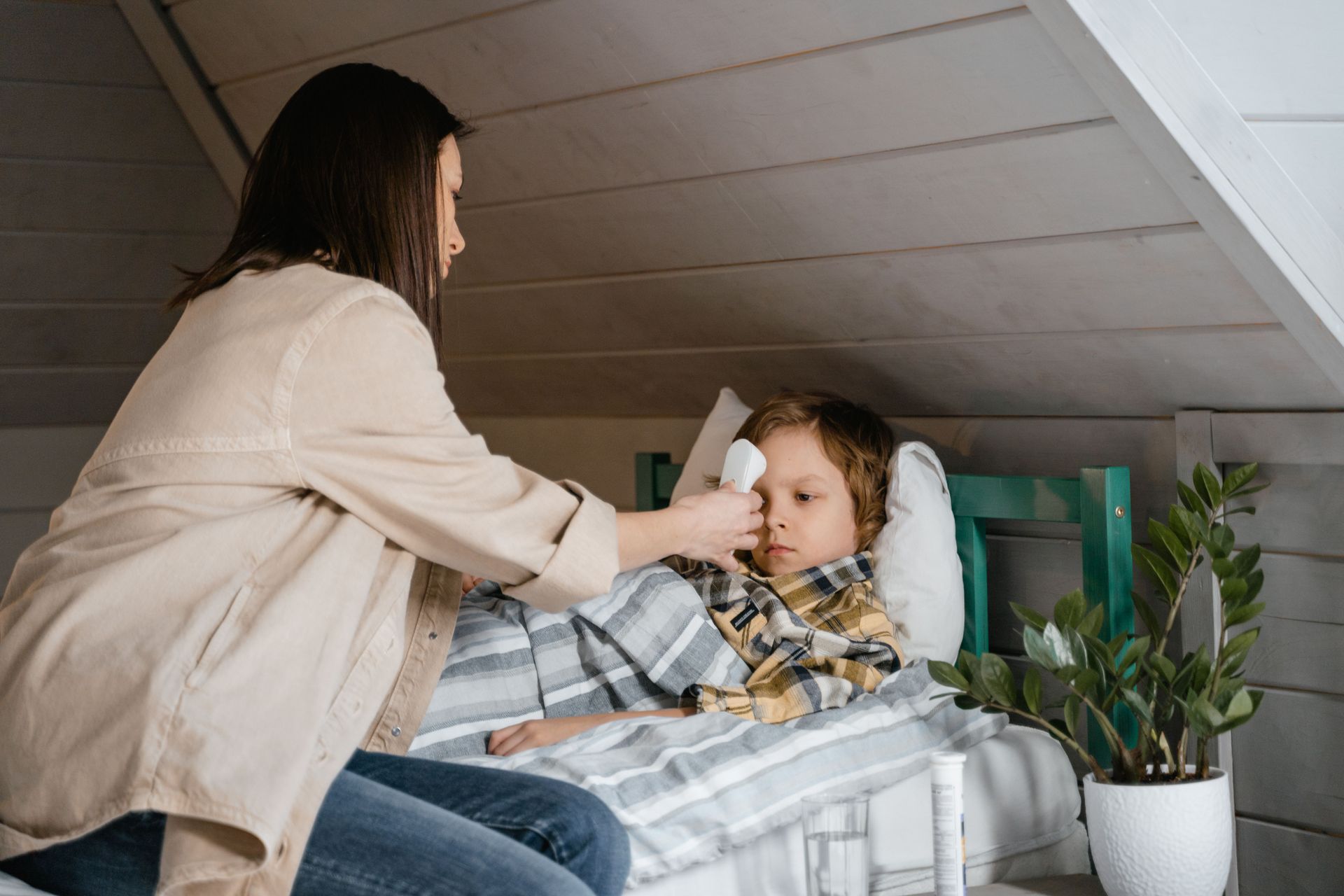
A fever is generally a temperature of 100.4°F or higher . Temperature readings can vary depending on the method used, so consider the number together with your child’s age, behavior, symptoms, and overall appearance.
A fever can feel alarming, but it is usually a sign that the immune system is responding to an infection. The fever itself is not always the most important concern. How your child looks and acts—and whether they are drinking, breathing comfortably, and responding normally—also matters.
If you are unsure how to interpret a temperature, contact Beacon Pediatrics for guidance. Our pediatric practice serves families in Norwell, MA, with evidence-based care from birth through the college years.
Why does fever help fight infection?
Fever is one way the body responds when it is fighting an infection. A higher body temperature can make the body less comfortable, but it may also support the immune response. The goal of care is usually to help your child rest, drink, and feel more comfortable—not necessarily to make the temperature completely normal.
Remember these points:
- Fever is a symptom, not a complete diagnosis.
- Your child’s age and behavior help determine next steps.
- Comfort and hydration are important.
- A very young infant with a fever needs prompt medical advice.
- Concerning symptoms may require emergency care, regardless of the temperature.
How can you make a child with a fever more comfortable?
Offer frequent fluids and encourage rest. Dress your child in comfortable, lightweight clothing, and avoid bundling them in heavy layers. Check on them regularly and pay attention to changes in breathing, alertness, drinking, and urination.
Medication may help with comfort when used appropriately. Dosing should be based on your child’s current weight , and the correct product and dose matter. Do not guess or use an adult dose. For Beacon Pediatrics’ medication information, see Medicine Dosages, Acetaminophen (Tylenol), and Advil/Motrin (Ibuprofen) .
Because dosing depends on weight and individual circumstances, ask Beacon Pediatrics before giving fever medicine if you are uncertain . Never give aspirin to a child unless a clinician specifically directs you to do so.
Avoid unproven or unsafe cooling methods. If your child is shivering or becomes more uncomfortable, stop and contact a pediatric professional for advice.
When should you call about a fever in children?
Call Beacon Pediatrics for a temperature of 100.4°F or higher in any baby younger than 3 months . Young infants need prompt medical evaluation because serious infections can develop quickly, and their symptoms may be subtle.
For older children, call when you are worried about how your child looks or acts, when symptoms are worsening, or when you are unsure what to do. You can also schedule a Sick Child Visit and/or review our Is Your Child Sick?® resources.
Contact the office for personalized guidance rather than relying only on the number on the thermometer. Beacon Pediatrics can help you decide whether your child needs an appointment, advice at home, or more immediate evaluation. See Appointments for scheduling information and After Hours for the practice’s after-hours guidance.
When should a child with a fever go to the ER?
Go to the emergency room or call emergency services when your child has a serious warning sign, such as:
- Trouble breathing, blue or gray lips, or severe breathing distress
- Difficulty waking, unusual unresponsiveness, confusion, or a seizure
- Signs of severe dehydration or inability to keep fluids down
- A rapidly worsening condition or an appearance that feels seriously abnormal
- Any emergency that makes you believe your child is in immediate danger
For emergency information, visit Beacon Pediatrics’ Emergencies page. If you are uncertain whether a situation is an emergency, choose the safer option and seek immediate help.
This article is general information and does not replace an examination or individualized medical advice. A clinician may recommend different steps based on your child’s age, health history, symptoms, and measured temperature.
Fever care checklist
Use this quick checklist while deciding what to do:
- Take and record your child’s temperature and the time.
- Note your child’s age, symptoms, behavior, breathing, and fluid intake.
- Remember that 100.4°F or higher in a baby under 3 months requires a call .
- Offer fluids, rest, and comfortable clothing.
- Ask about weight-based medication dosing instead of guessing.
Frequently asked questions about fever in children
Is 100.4°F a fever?
Yes. A temperature of 100.4°F (38°C) or higher is generally considered a fever. The next step depends on your child’s age, symptoms, and overall condition.Is fever itself dangerous?
Fever is often the body’s response to infection and is not automatically dangerous. Watch your child’s behavior, breathing, hydration, and alertness. Call for guidance when you are concerned, and seek emergency care for serious warning signs.What should I give my child for a fever?
Comfort medication may be appropriate, but dosing must be based on your child’s current weight and the specific medicine. Ask Beacon Pediatrics if you are unsure. Do not guess, combine products carelessly, or use an adult dose.When should I call about a baby’s fever?
Call Beacon Pediatrics for any temperature of 100.4°F or higher in a baby younger than 3 months. Prompt medical advice is important for this age group.Should I go to the ER for every fever?
No. Many fevers can be managed with comfort care and pediatric guidance. Go to the ER for trouble breathing, severe dehydration, seizure, difficulty waking, serious unresponsiveness, or another immediate emergency.
What should parents do next?
Fever in children is usually a sign that the body is responding to an infection, so focus on comfort, fluids, rest, and careful observation. The most urgent age-based rule is to call for any temperature of 100.4°F or higher in a baby younger than 3 months. For older children, contact Beacon Pediatrics when symptoms worsen, your child seems unusually ill, or you are unsure about medication dosing or next steps. If your child has emergency warning signs, seek immediate care. For non-emergency concerns, book an appointment with Beacon Pediatrics in Norwell, MA.